The South-West Marine Ecosystems Programme: The Power of Citizen Science
Every year, marine experts from around the south-west of England convene, bringing together expertise across species and disciplines to provide a holistic, ecosystem-wide picture of the marine environment in the South-West.
This is part of the annual cycle of the South-West Marine Ecosystems programme, or SWME. This regional programme focuses on observation, reporting, and communication to better understand how and why the marine environment is changing.
But SWME is not just driven by scientists. Its model draws on a broad audience, combining observations of citizen scientists and the wider public with insights from researchers, managers, and policy advisors. SWME's annual cycle of reporting is one of the clearest working examples of citizen and professional science working effectively together.
Divers have long been part of this picture. Last year's SWME State of the Seas report for 2024 outlined the recovery of Zostera marina seagrass beds in Cawsand Bay, Plymouth Sound, expanding from 2 hectares in 2006 to 29 hectares in 2024. The baseline data underpinning that recovery story was built on diver surveys, conducted year after year from 2006 to 2018. Without those dives, there would be no way to measure how far things have come. Elsewhere in SWME's reporting, divers contribute sightings of sponge crabs, plumose anemones, and subtle shifts in species abundance.
At this year's conference, the continued and vital role of citizen scientist contributions like this was highlighted throughout the day.
Diving with Purpose: How Divers Can Contribute to Citizen Science in the South-West
Are you a diver in the south-west of England? Interested in monitoring the state of your marine environment? Based on the insights shared at the SWME conference 2026, here are a few things to look out for:
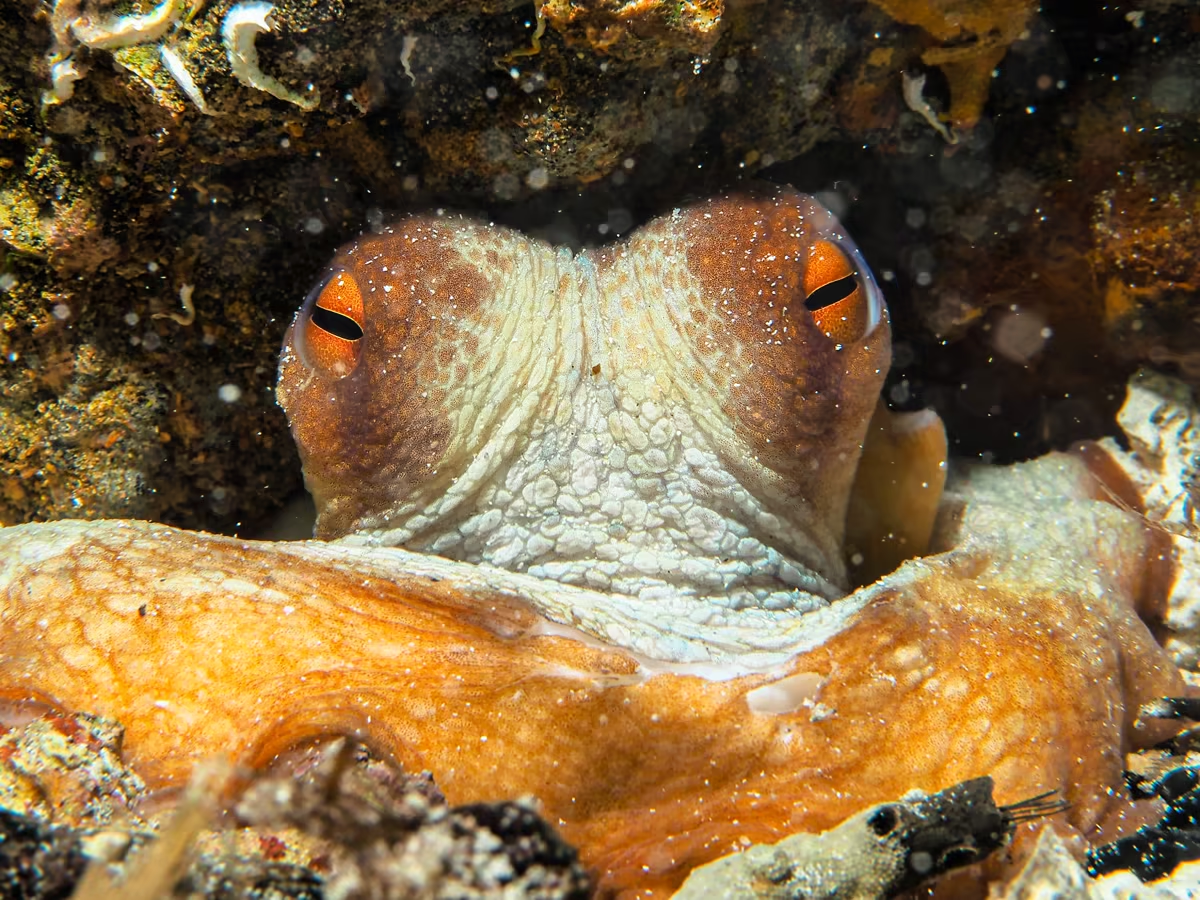
- The common octopus bloom continues. They're still out there in numbers. Where are you seeing them, and how big?
- Spiny lobsters are having a good year. After a long absence from many south-west sites, Palinurus elephas is showing signs of continued recovery.
- Sardines and anchovies are moving in. Herring stocks are showing signs of collapse, and smaller pelagic species are beginning to fill the gap. A shifting food web with implications throughout the ecosystem.
- Blue sharks and bluefin tuna are increasingly present. Both species are appearing in higher numbers off the south-west than in previous years.
- Basking sharks and humpback whales are showing up in greater abundance. In contrast to Ireland, where whale watching businesses shut up early this season as the animals failed to show in their usual numbers.
- Risso's dolphins are pushing northward from the Bay of Biscay. Encounters are becoming more likely in south-west waters.
- Seagrass is recovering. If you're diving in Plymouth Sound or other known seagrass sites, record what you see: extent, condition, and associated species.
Making Every Dive Count: Log Your Observations to Contribute to Marine Science and Conservation
Divers are perfectly placed to contribute to exactly this kind of science. Every descent is a transect through an ecosystem that researchers are trying to understand. Species identifications, observations on ecosystem health, water conditions, and unusual sightings: this information can and should go way beyond your logbook. Aggregated across thousands of dives, it becomes the kind of long-term, distributed evidence that programmes like SWME really rely on. The kind that informs management decisions and conservation planning.
SWME demonstrates what is possible when observations are taken seriously. Scuba Network is built on the same principle: that the people already in the water are uniquely positioned to contribute their observations to marine science and conservation. They just need the right platform to log them, share them, and make them count.
Want to log your dives and contribute to citizen science? Check out our dive
platform at www.scuba.network
Want to know more about the state of the seas in the south-west of England? Look out for the SWME 2025 annual report this summer.
Source
South-West Marine Ecosystems. The State of South-West Seas in 2024 Report. Available at: swmecosystems.co.uk