Get to know Neil, Scuba Network's partnerships and communications lead, his 30+ years of diving adventures, and his passion for connecting divers with ocean conservation.
After an early career learning how to build websites and digital transaction platforms for a US financial services company, I pivoted to the charity sector, conservation, and the environment.
I've worked in and managed in-house digital teams at WWF-UK, the Ramblers, Forum for the Future, and many others, where I've learned a lot about the practicalities of conservation, sustainability, and ways to try to save the planet. I've also learned what motivates people to want to help and support, get involved, and give their time. It's taught me the long-term strategies and short-term tactics needed for organisations to survive and thrive in the modern world.
I now own and run a small digital strategy and transformation agency, Eagle Ray Digital, which helps charities, CICs, and public sector organisations use the best tools and technologies to achieve their goals.
Alongside that, I support and engage with a range of ocean and marine conservation organisations, sharing their vital work.
What's your role at Scuba Network?
I bring digital strategy know-how and ocean conservation passion to my role developing partnerships and communications for Scuba Network. I also bring a decent network of contacts and ex-colleagues from various diving, ocean, and conservation organisations with me, most of whom I'm hoping will be supporters and collaborators on the network soon! I'm particularly focused on growing our contributor and ambassador network of inspiring ocean advocates.
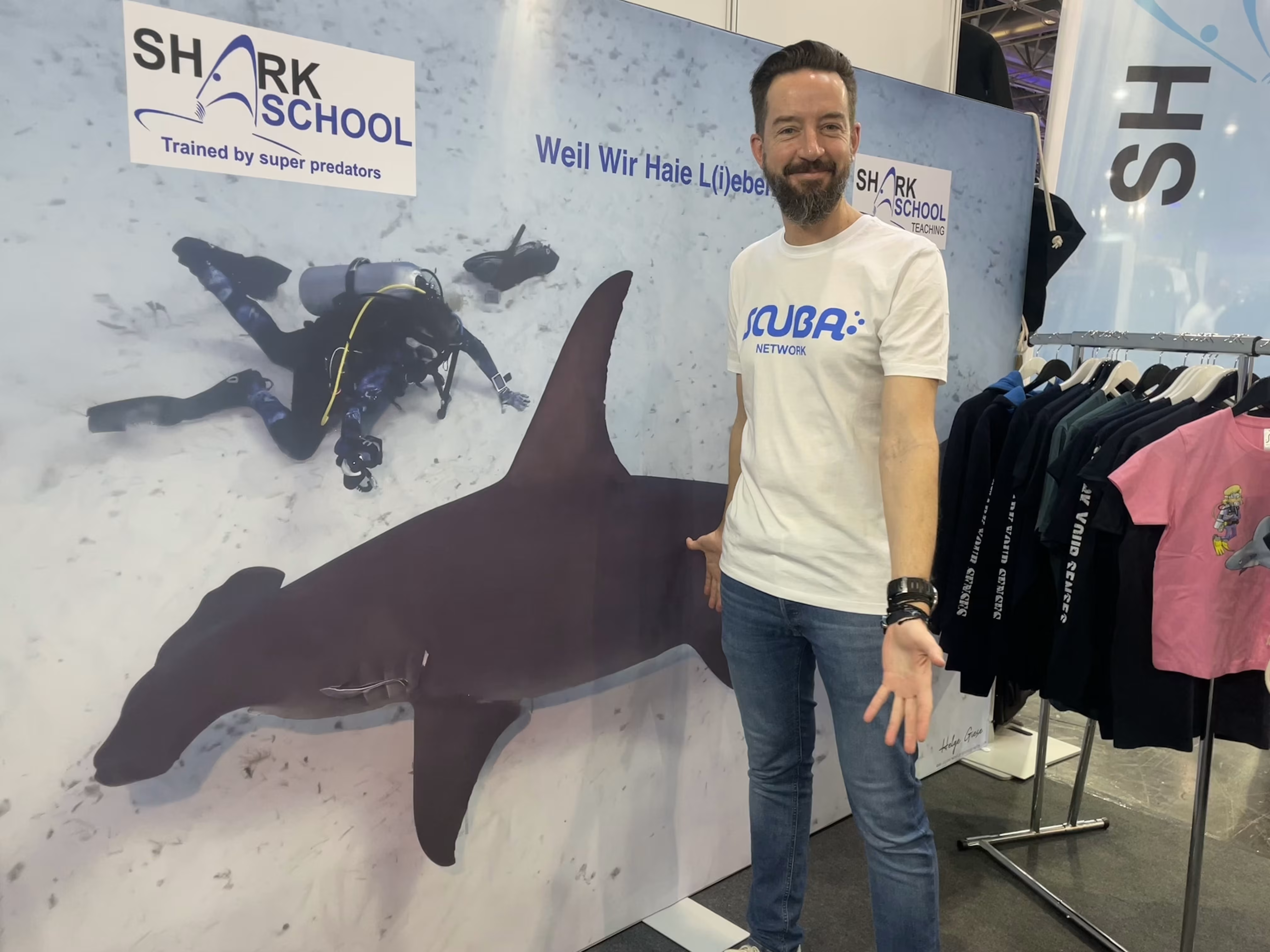
I attend dive industry events and shows to spread the word about the Scuba Network, its current impressive capabilities and huge future potential. I engage potential partners, listen to feedback, and work out new ways the network can connect the wide variety of diving and ocean lovers.
Photo: Neil Gunn
How long have you been diving for?
I've been diving for more than 30 years, starting at 15 in a swimming pool in Fiji, and going on to dive some of the most magical places on the planet. I've dived for fun, for exploration, for excitement, to contribute to science and conservation, and to meet some of the most impressive creatures on our blue planet. Like many divers I speak to, a year without diving is a year wasted, so I try to go as much as possible.
250+ dives and counting, from near-freezing Icelandic lakes to crystal-clear tropical seas in French Polynesia.
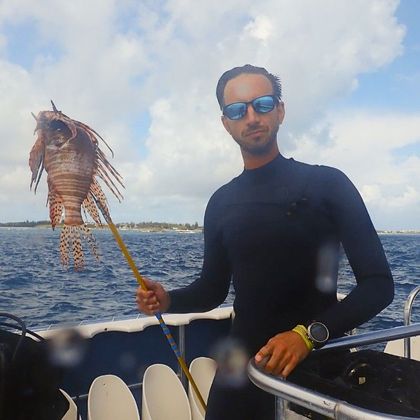
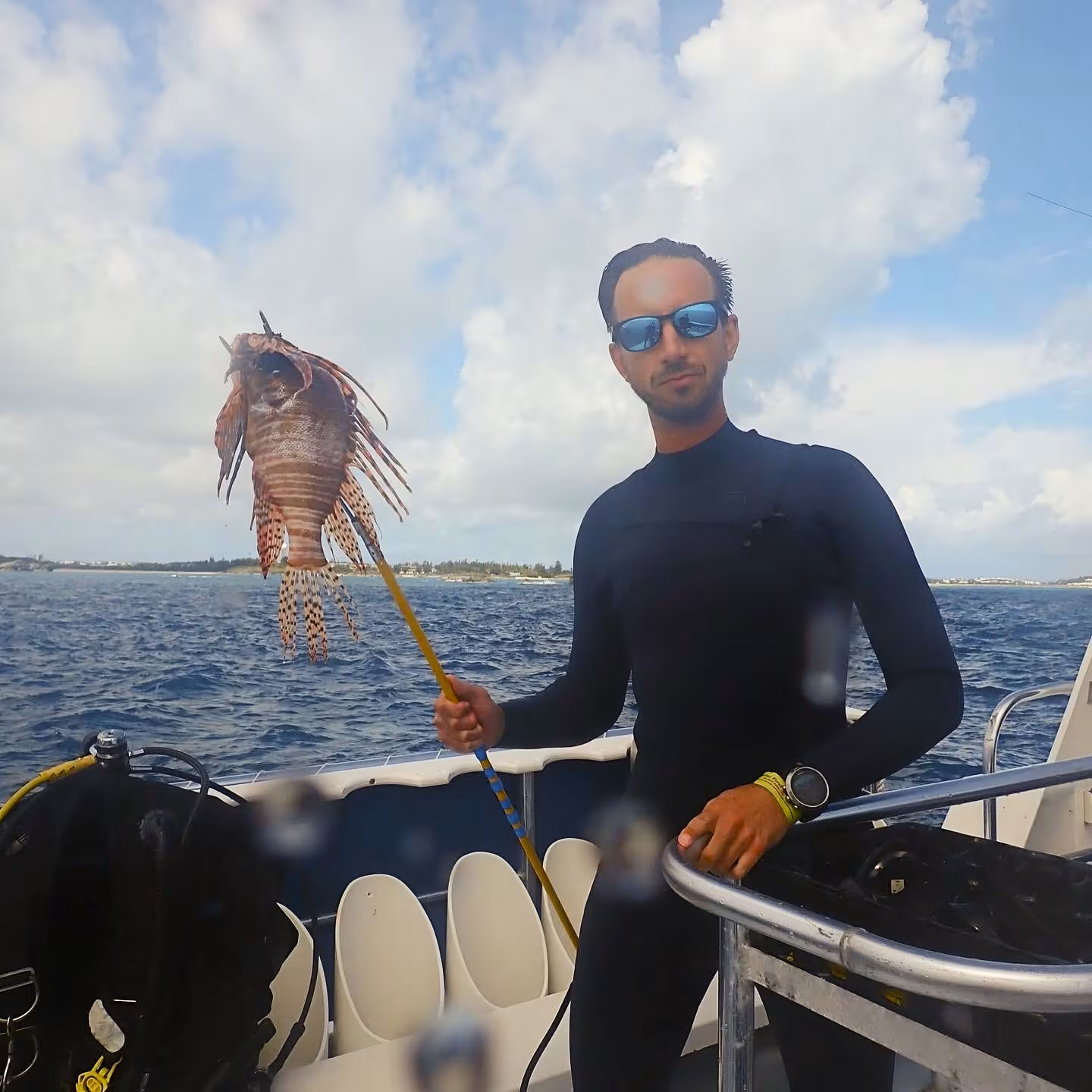
I've carried out scientific research on coral reefs and seahorse populations in the Philippines, and become an accredited lionfish culler in Bermuda to help reduce the population of that devastating invasive species in the western Atlantic and Caribbean.
What is your most memorable dive?
A tough one for any diver to answer! Can I have two?
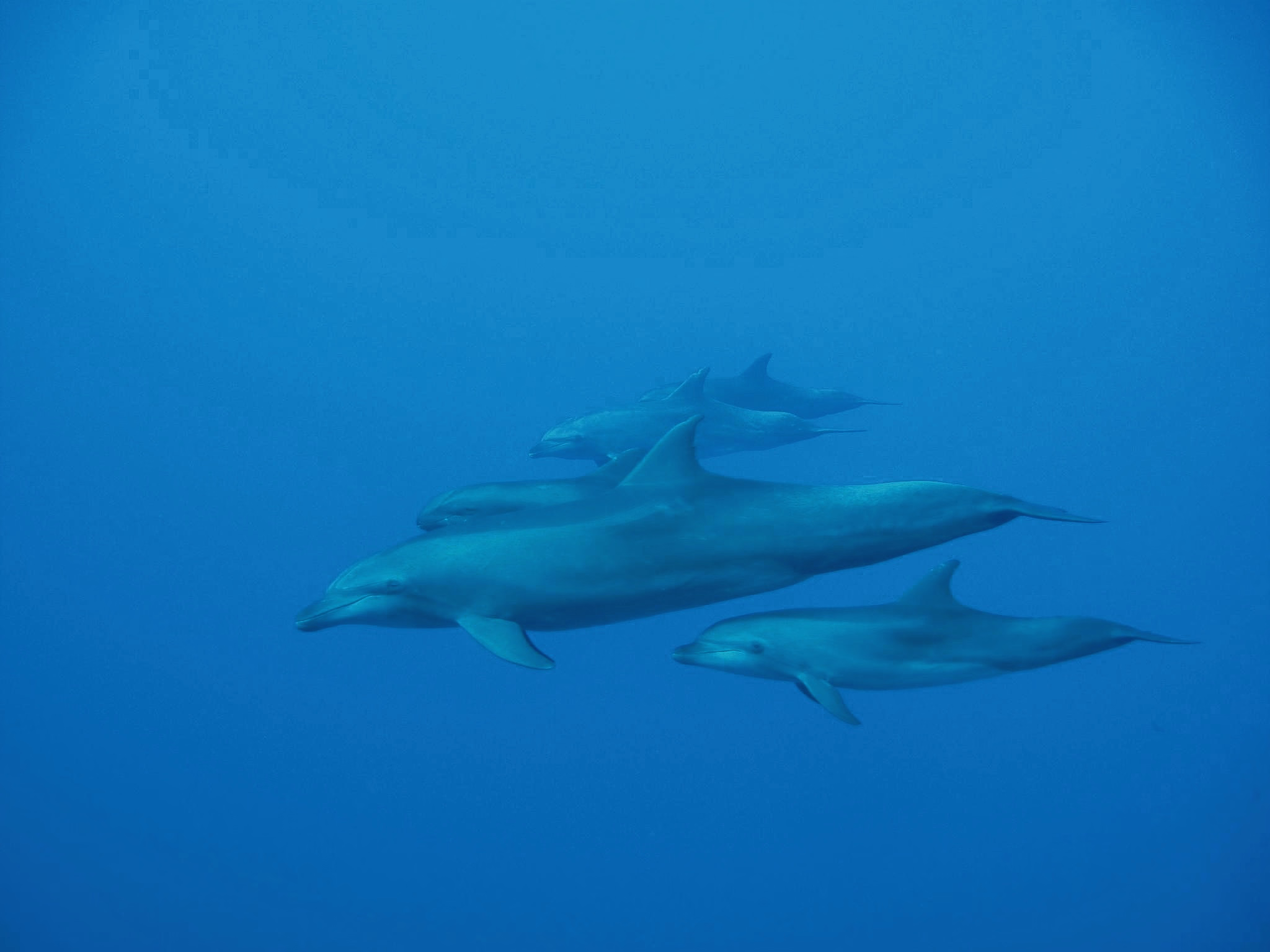
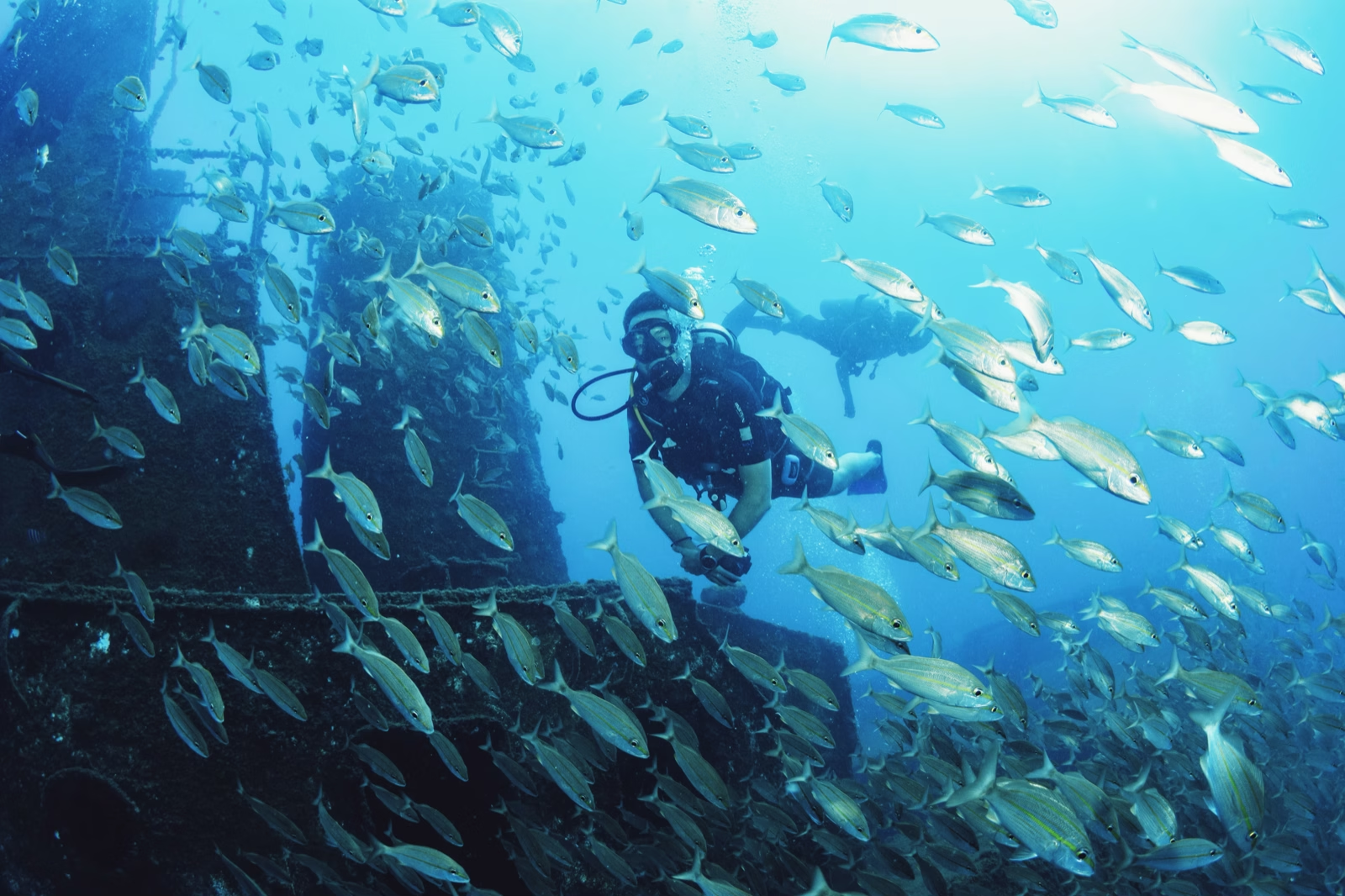
For jaw-dropping natural wonder, it's hard to beat a dive I did in the pass at Rangiroa in French Polynesia. The outer drop-off there is well known for the variety and particularly the sheer number of black-tip and grey reef sharks and other marine species you can see. I lost count at more than 50 sharks, just at the point a pod of 5 bottlenose dolphins swam past us. Unforgettable diving in a beautiful part of the southern Pacific.
Photo: Neil Gunn
For luck and serendipity, it has to be my 150th dive, which happened to be off Little Brother Island in the Red Sea. We'd already been lucky enough to see and photograph a number of oceanic white tip sharks on previous dives on the trip, so we were almost a bit blase about seeing them on this dive, when there were a couple quite close to the boat on our descent.
We then heard banging on a tank so that a fellow diver could alert us to a thresher shark in the deep below us. Carrying on the dive around the wall of the island, I had to point out to a couple of divers obliviously swimming along that there was a hawksbill turtle happily cruising a few metres behind them, followed by a big Napoleon wrasse who clearly thought he or she owned the joint!
As if all of that majestic marine life wasn't enough to mark my 150th dive, the best was yet to come: a huge oceanic manta ray glided past in the blue. For variety and sheer wonder, that one still takes the cake.
What does diving mean to you?
You can probably already tell a bit of why I love diving so much from my descriptions of my favourite dives. Coral reefs, the incredible variety of marine life, the other-worldliness of spending time underwater. Marine creatures are some of the most fascinating and beautiful things on our planet, and diving lets you see and interact with them at very close quarters.
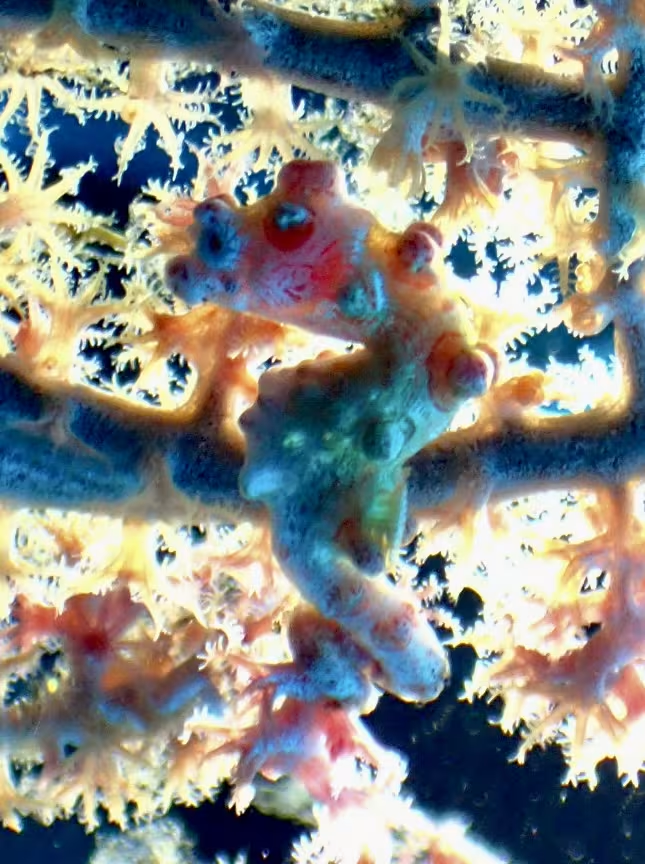
I've been metres away from the biggest fish in the sea, the whale shark, and centimetres from one of the smallest, a pygmy seahorse. Diving is a great way to see a small part of the biggest and most diverse set of ecosystems on the planet.
Photo: Neil Gunn
What is the biggest change you've witnessed in the ocean, or the most striking example of human impact?
I've been lucky to dive in most of the oceans on the planet, and it is rare these days to complete a dive without seeing, and when I can, collecting and removing, some sort of plastic debris. That's probably the number one most obvious impact.
I've seen scary numbers of invasive species like lionfish in the Caribbean and western Atlantic, which is why I became a certified PADI Lionfish Culler last time I was in Bermuda.
Photo: Neil Gunn
Probably even more worrying than that is the frequency with which I see bleached coral. It is more and more likely in the 21st century that bleaching is directly caused, or exacerbated by, increased water temperatures driven by climate change. The higher temperature causes the animal part of coral to eject the colourful algae that it relies on for the symbiosis required for coral to live and grow.
Both are examples of human impact on an ecosystem that is beautiful and fragile. You would be hard-pressed to find anyone who would say they'd prefer a world without coral reefs, yet as a species we are doing alarmingly little to protect them.
There are some great examples of coral conservation in action: restoration and regrowing projects, awareness programmes, alternative livelihood schemes for fishers and local communities. I just hope it's not too little too late for maybe the closest thing we have to heaven on earth.
Where do you see the value of the Scuba Network platform and what mission do you want to contribute to?
The Scuba Network has huge value as a way to connect divers and ocean lovers to each other, and to the best dive operators, dive centres, and ocean conservation organisations. Through the world map feature, divers can find companies to dive with and conservation projects to volunteer for, in almost any part of the globe.
The dive logging feature lets them record water temperature, visibility, dive duration, and many other aspects of a dive, either manually or by uploading from a dive computer.
Those logs then enable divers to contribute in two other exciting ways. First, the creatures divers encounter, the state of the coral, and other features they see can be recorded and added to the network database to contribute to citizen science.
Secondly, divers can record marine plastic and other debris they encounter. This is my favourite feature of the Scuba Network so far.
Divers can record the exact location of the debris, whether they were able to remove it during the dive, or not. And if not, the network will communicate with the nearest and most capable dive centre or hotel to remove the debris as soon as possible. That way every diver can contribute to cleaning up our beautiful and precious ocean, and ensure their favourite dive sites are kept clean and pristine for other ocean lovers to enjoy.