Get to know Nancy Cross, Scuba Network's science and policy lead, her work bridging marine science with ocean policy, and her journey from scuba to freediving.
N
Nancy Cross
March 19, 2026
6 min read
Team
Behind the Scenes
Community
Ocean Conservation
Marine Science
Meet the team: Nancy
What's the day job?
With a background in marine science and sustainable management, I founded C-marine, providing freelance support to organisations in marine science, policy and advocacy. Working across a diverse set of topic areas, I support charities, academic institutions and other organisations, working towards our common goal of a healthy ocean and planet.
Alongside my work with Scuba Network, current areas of interest include the integration of biodiversity and climate change into marine planning (with a paper about to be published), and the BBNJ or 'High Seas Treaty', which recently entered into force.
The BBNJ (Biodiversity Beyond National Jurisdiction) Agreement, also known as
the High Seas Treaty, is a landmark international agreement for the
conservation and sustainable use of marine biodiversity in areas beyond
national jurisdiction — the open ocean that covers nearly two-thirds of our
planet.
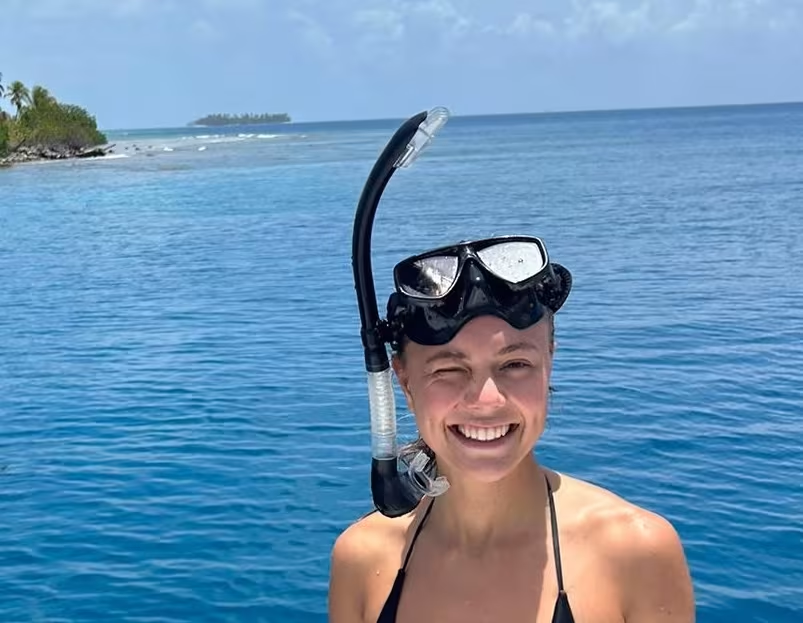
Photo: Nancy Cross
What's your role at Scuba Network?
I'm heading up the science and policy work at Scuba Network. Currently this means working to shape our data — the data that divers are logging on the platform — for scientific standards and policy requirements so that we can have a tangible contribution to the science that will improve ocean health.
With tens of millions of divers around the world, we have the potential to collect an incredibly large and valuable dataset, but ensuring that this is standardised and applicable for scientific use and evidence-based decision-making is a challenge that we're working hard on.
The ocean is central to climate action and conservation efforts to promote
biodiversity. Making sure diver-collected data meets scientific standards is
key to turning passion into real impact.
I'm also working on guiding Scuba Network's strategy on these priority areas — climate and biodiversity — ensuring that what we build has genuine value for science and policy.
How long have you been diving for?
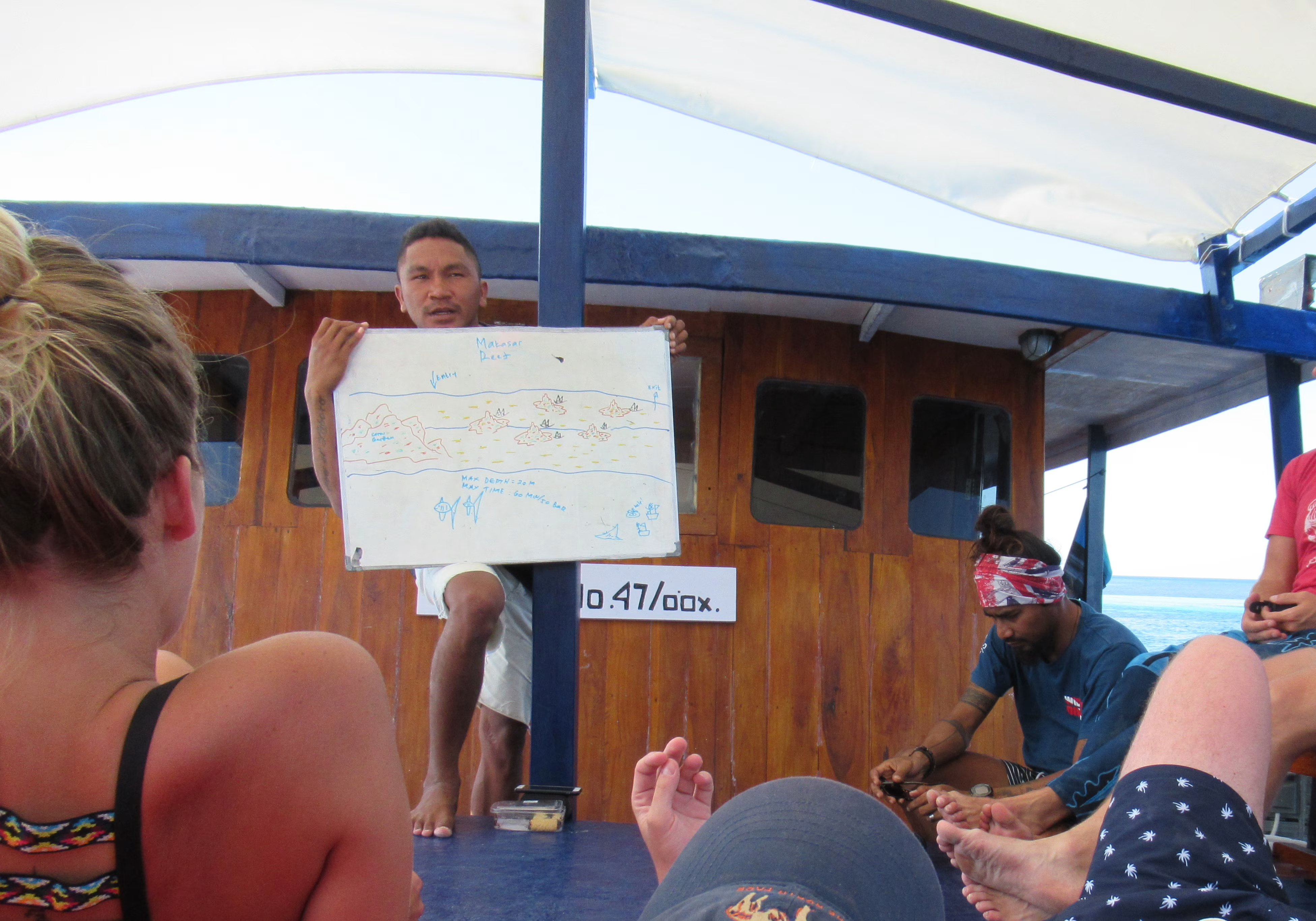
I started scuba diving when I was 18, on my first big trip away from home. My first fun dive was on the Great Barrier Reef, chasing unbleached corals north of Port Douglas. As a first experience, it's fair to say this might have spoiled me, but I've followed it up with some pretty great diving in Thailand, Indonesia and Panama.
Photo: Nancy Cross
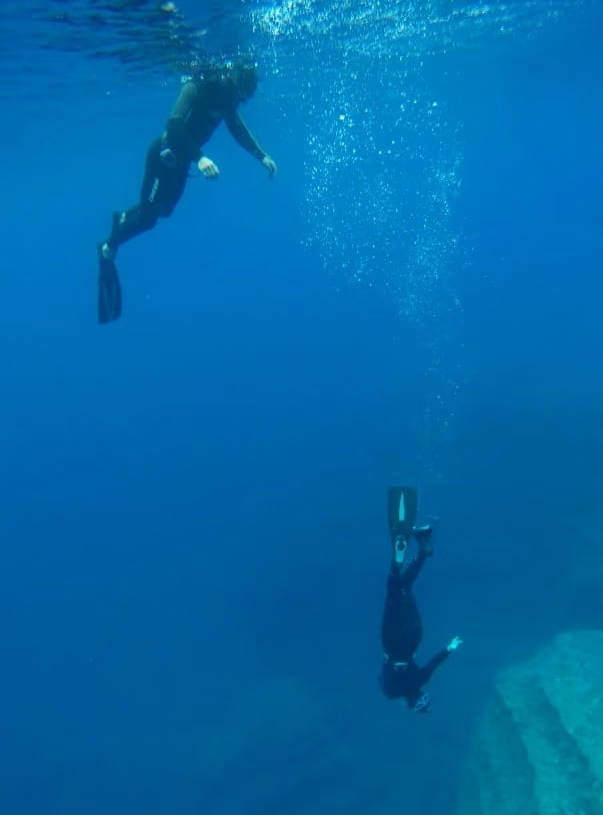
A couple of years ago, I found myself drawn away from the clunky tanks and regulators, to the slightly more free practice of freediving — it's in the name.
Freediving strips away the equipment and noise, leaving just you and the
ocean. It's a completely different way to experience the underwater world.
What is your most memorable dive?
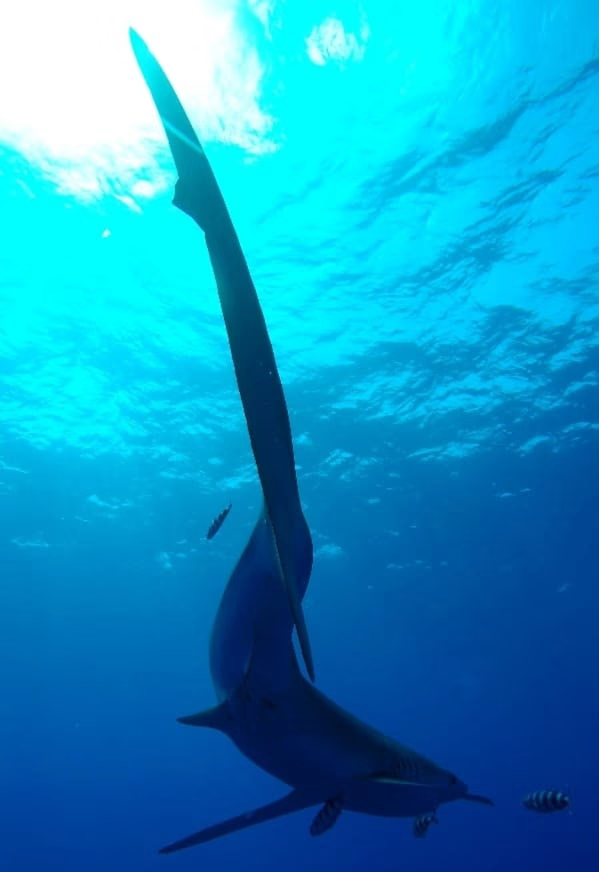
Scuba — it has to be diving the cauldron in Komodo National Park on my birthday. The currents there are wild and they pull you into a large hollow in the rock (the cauldron). The shape of the rock formation means that the water shoots out through a narrow channel on the other side and you fly along with it. This is why the site gets its nickname 'shotgun' — there's not much you can control except your buoyancy. It was like being on a rollercoaster! Manta rays during the safety stop was the cherry on the cake.
Photo: Nancy Cross
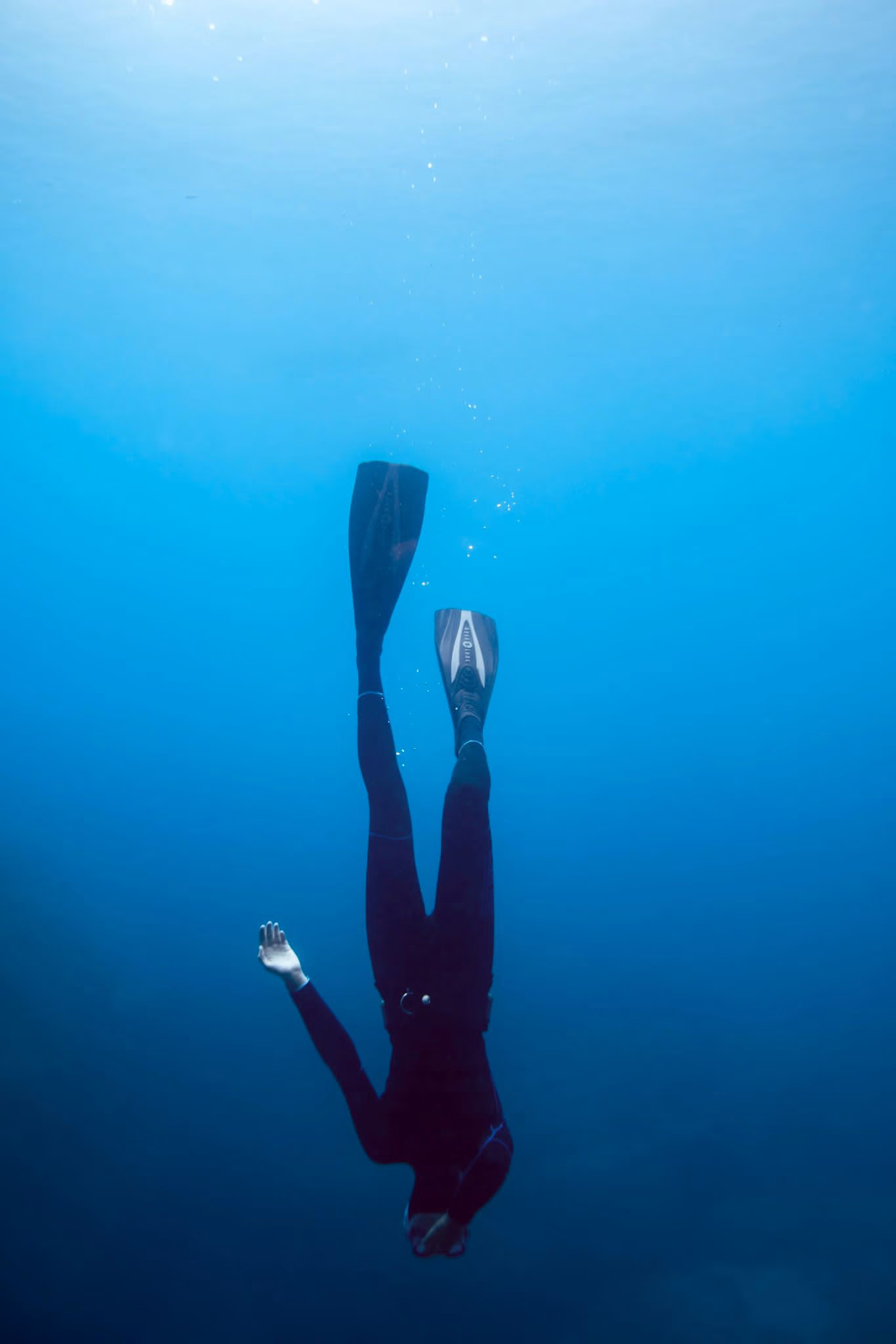
Freediving — probably one of the dives from my very first session diving on a line. I remember lying on my back in the warm, salty Med, looking up at the blue sky and feeling completely calm, almost gooey. This is the best feeling before a dive. Then pulling myself backwards and down along the line and hitting, with surprising ease, the weight at 20m deep.
What does diving mean to you?
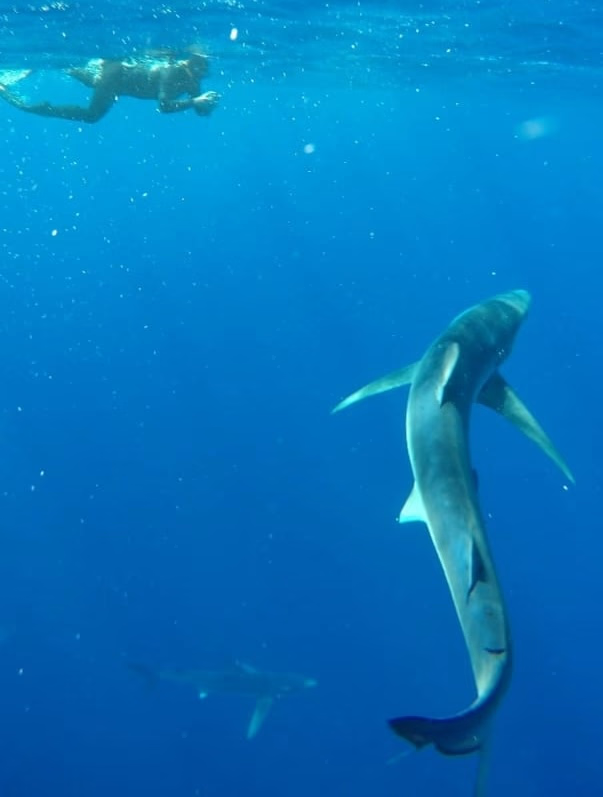
Diving, be it scuba or freediving, is unlike anything else. It's different to being on the surface, where you feel the adrenaline of not knowing what's below you. Once you descend, it's not scary. You feel like you are a part of it all.
Photo: Nancy Cross
Diving can be humbling, when you realise that you are not in charge, and it can be challenging, when you push yourself to new limits. You learn about yourself and you learn about the ocean. You meet new people and connect on a deeper level with those that you dive with.
What is the biggest change you've witnessed in the ocean, or the most striking example of human impact?
Litter, plastic pollution and ghost fishing gear are all examples of human impact that can feel pretty obvious when you dive. I've rescued coke cans from the seafloor and tucked crisp packets up my wetsuit sleeve. I've untangled fishing line caught up in beautiful forests of seaweed. There's a lot you do see as a diver, but there's a lot we might not notice!
This is why education and ocean literacy are so important — so that we can
understand what we're seeing and recognise what's changing beneath the
surface.
Where do you see the value of the Scuba Network platform and what mission do you want to contribute to?
It's been really exciting and motivating to see the appetite for a platform like Scuba Network. Divers want an interactive place to log their dives, see where other people are diving, and connect with other divers, dive centres and organisations working in marine conservation.
Photo: Nancy Cross
But more than this, we really have an opportunity to contribute towards protecting the place that is so important to us. Sustained monitoring of the marine environment is vital to build the datasets that inform evidence-based policy and support the sustainable management of our ocean, and this is what we're working towards.
It's not the whole solution — we need continued investment, with long-term
political commitment and international collaboration — but as divers, we can
be a part of the solution simply by doing the thing that we love: diving!