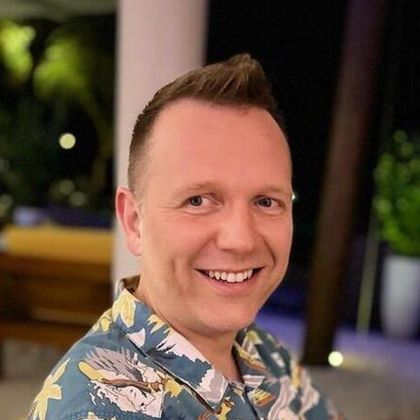
Get to know Dan, the founder of Scuba Network, his journey from software engineering to diving, and his vision for connecting the diving community and ocean conservation.
Prior to going full time on Scuba Network, I was working as a product-focused software engineer, building user-centred web applications across a range of industries. Over the years I’ve worked on everything from intelligence dashboards, to real-time sports apps, to TV platforms.
Most of my work has sat somewhere between product, data, and user experience. A big part of my career has involved building interfaces for large and often messy datasets, turning complex information into tools that people can actually understand and use.
I’ve spent close to 20 years working across startups, scale-ups, and large organisations, both as an employee and contractor. Along the way I’ve been lucky enough to work with some incredibly talented engineers, designers, and domain experts, helping teams build platforms that are used at scale.
It’s not a career I had planned. Like many people in tech, I more or less stumbled into it. But it’s one I’ve grown to really love. Solving difficult problems, building things that people truly enjoy using, and gradually getting better at the craft over time.
That background eventually became the foundation for Scuba Network, where those technical skills finally collided with something much more personal: my long-standing love of the ocean and scuba diving.
What's your role at Scuba Network?
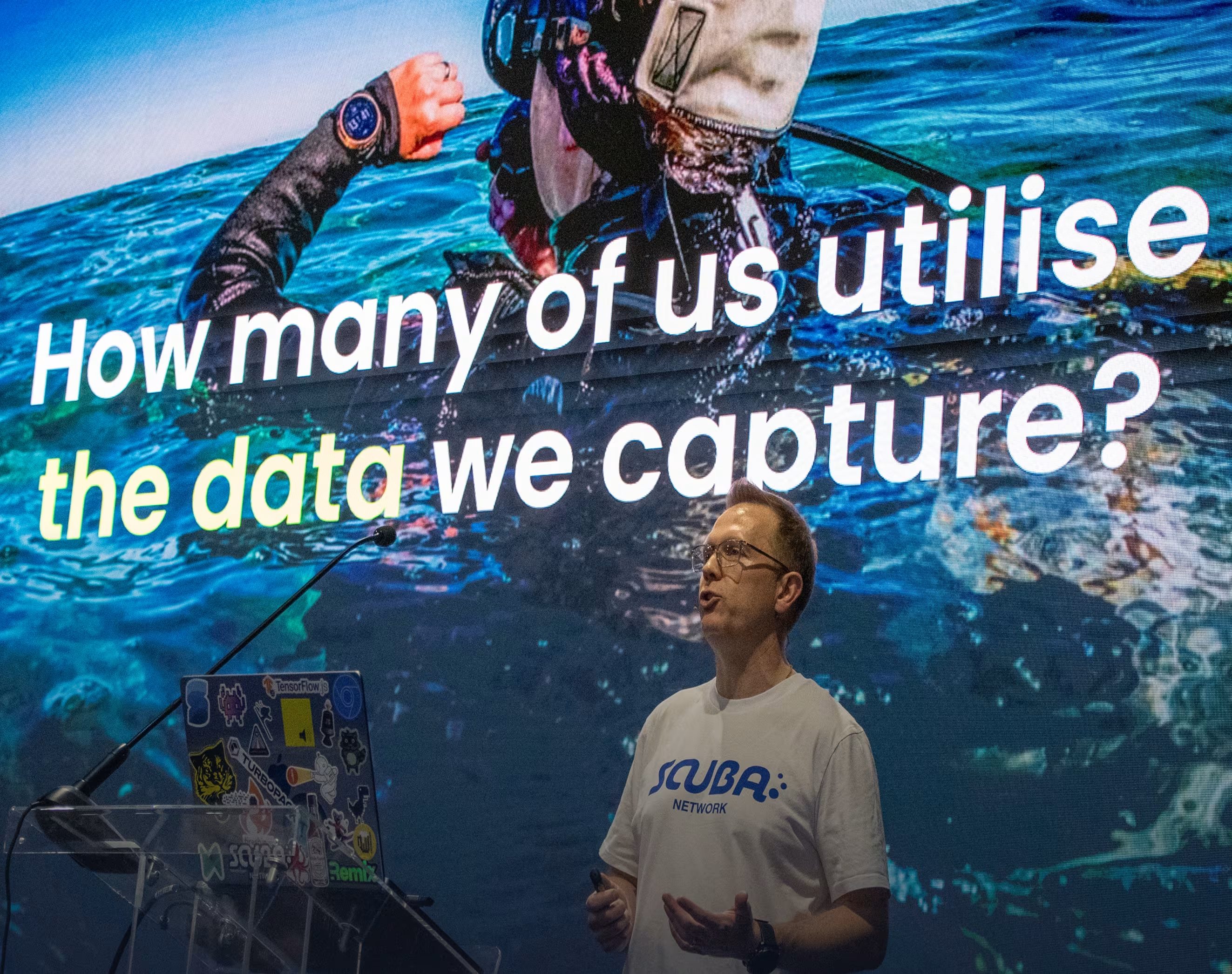
I’m the founder and CEO of Scuba Network, where I lead the vision, product direction, and overall growth.
I’m still very hands-on with the development of the platform, although that’s changing pretty fast as the company evolves and my role becomes more strategic. My focus now is increasingly on guiding the direction of the product and bringing together the people and partnerships needed to build something much bigger than just an app.
What we’re really trying to create is a community for divers and ocean lovers who have, for the most part, always been fairly disconnected from one another. Bringing that together into a single platform is a huge challenge, and again not something I fully planned or foresaw when I first started on this journey.
That said, I love a challenge, and I strongly believe in what can be achieved when the right people with a shared passion come together around a shared goal.
Day to day, things vary massively. One day I might be deep in the codebase, the next working on investor decks, the next speaking with users, or helping shape our communications. It’s varied, sometimes chaotic, but never boring.
How long have you been diving for?
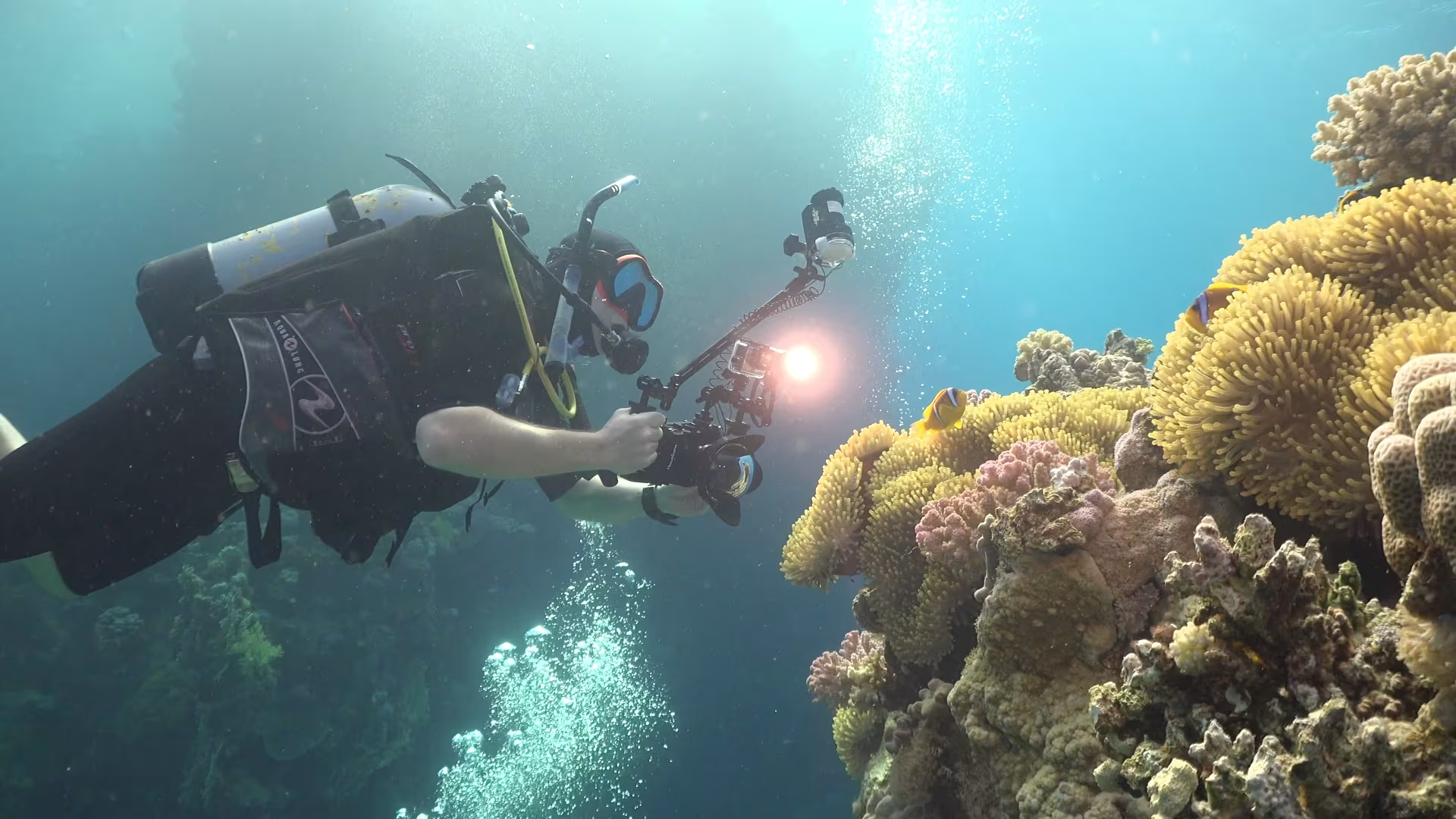
Photo: Dive guide Muhammad
I first tried scuba diving when I was about 14 on a family holiday in Spain, just north of Barcelona. It was one of those “try dives” where you get a very quick briefing, some oversized gear, and are more or less pointed in the direction of the sea.
I don’t remember much about the dive itself. What I do remember though is my stepdad getting a nosebleed underwater, which caused a fair bit of confusion. Needless to say, it wasn’t exactly the most inspiring introduction to diving, and it didn’t leave me rushing back for more.
My second attempt came a few years later, just after I graduated in the early 2000s. Another family trip, but this time in the Florida Keys!
That experience was completely different...
The water was warm, the visibility seemed endless, and within minutes we were surrounded by reefs and marine life I'd only ever seen on tv.
I was hooked! And from that moment, diving became a lifelong passion that
would eventually shape my entire career.
I met my wife a few years later, quickly got her hooked, and we now enjoy some epic adventures together.
To be honest, all the dives there were incredible. I saw more fish on a single dive than I think I’ve seen in my entire life combined. The water was so alive and the energy underwater was mind blowing. Huge schools of pulsing glassfish, enormous bumphead parrotfish cruising past like underwater bulldozers, wobbegongs resting on the reef, and tiny pygmy seahorses hidden amongst the corals.
There was a moment on one of the dives where we were cruising with the current, taking it all in and completely immersed. I was so in awe I actually started to well up. I genuinely couldn't believe a place like this existed and that I was lucky enough to be there experiencing it.
So full of life, so untouched, and unlike anywhere else I’ve ever dived.
No wonder they call it the last paradise.
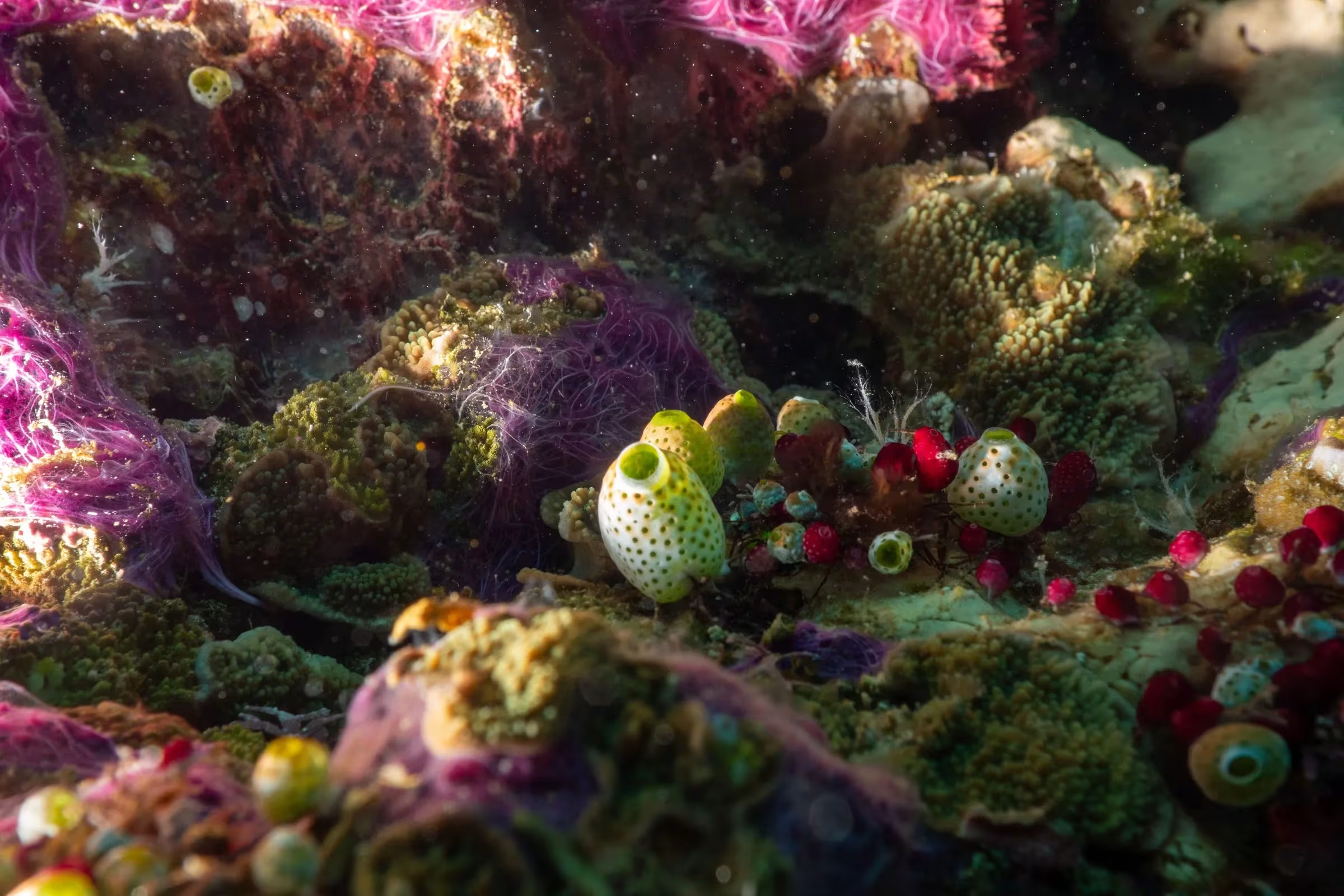
Photo: Dan Voyce
What does diving mean to you?
Diving is the ultimate adventure and the biggest gift nature has given us. I always wanted to be a spaceman when I was a kid. Well, that didn't quite go to plan. However, I'm now able to float, somewhat effortlessly, in alien environments, coming face to face with creatures that look like they belong on another planet.
I feel incredibly grateful to have this opportunity, because not everyone does. If it wasn’t for my mum taking me for swimming lessons, the trips to the seaside where I’d snorkel for hours on end, or the family trip to the Florida Keys, I probably wouldn’t be here today.
We should be doing what we can to make diving more accessible to anyone who
wants to experience it. But at the same time ensuring divers are part of the
solution, not the problem.
Photo: Dan Voyce
What is the biggest change you've witnessed in the ocean, or the most striking example of human impact?
Another tough question. And which one do you choose? The streams of floating plastic in the middle of nowhere in West Papua, the mass coral bleaching events, or the vast amounts of dead coral on the Great Barrier Reef?
Everywhere is impacted. Even in Raja Ampat we saw signs of coral bleaching. It hits much harder when you see these things first hand.
That said, there are also examples that give real hope.
In places like Cabo Pulmo in Mexico, a small coastal community, together with scientists and conservationists, pushed for the creation of a marine protected area after seeing fish stocks collapse from overfishing. Over time, monitoring and research helped demonstrate the recovery of the ecosystem, and today fish biomass there has increased by more than 400%. It's often cited as one of the most successful marine conservation stories in the world.
When people come together, collect the right information, and turn that
knowledge into action, the ocean can recover remarkably quickly.
Where do you see the value of the Scuba Network platform and what mission do you want to contribute to?
Right now the diving industry is lagging behind and, in many ways, still stuck in the 90s. There’s some incredible hardware out there, but when it comes to software most of us are still relying on email, spreadsheets, and Facebook groups. There are more than a dozen different training agencies, which is a lot for a relatively niche sport, and navigating the industry often takes a huge amount of effort and patience.
Each training agency and dive computer manufacturer has its own app, meaning everyone is disconnected and data is fragmented. Divers are dropping out of the sport, yet we have very little visibility into why, and no real way to measure or address the problem. At the same time, the industry is struggling to attract new divers, particularly younger generations, because there are too many options, no clear pathway, and very little sense of purpose.
The ocean itself is also under enormous pressure. There’s an incredible amount of work being done to protect and restore it, but much like the diving industry, that work is often fragmented and siloed across different organisations and initiatives.
Scuba Network aims to bridge those gaps.
We're building an open platform that connects divers, dive organisations, and ocean conservation initiatives, bringing together data that has historically been scattered and difficult to access. Information like water temperature, habitat conditions, dive activity, and marine life sightings is incredibly useful for divers planning their next dive, but it can also be hugely valuable for science, conservation, and policy.
If we can connect those pieces properly, diving becomes more than just a
recreational activity. It becomes a global network of people helping us better
understand and protect the ocean.