What a Giant Coral Discovery Says About Citizen Science and the Future of Diving
When a veteran diver and her daughter documented a massive coral colony on the Great Barrier Reef, they proved that some of the most important ocean discoveries come from divers who simply pay attention.
Some of the most important ocean discoveries are not made by large research vessels or advanced expeditions. Sometimes, they are made by divers who simply pay attention.
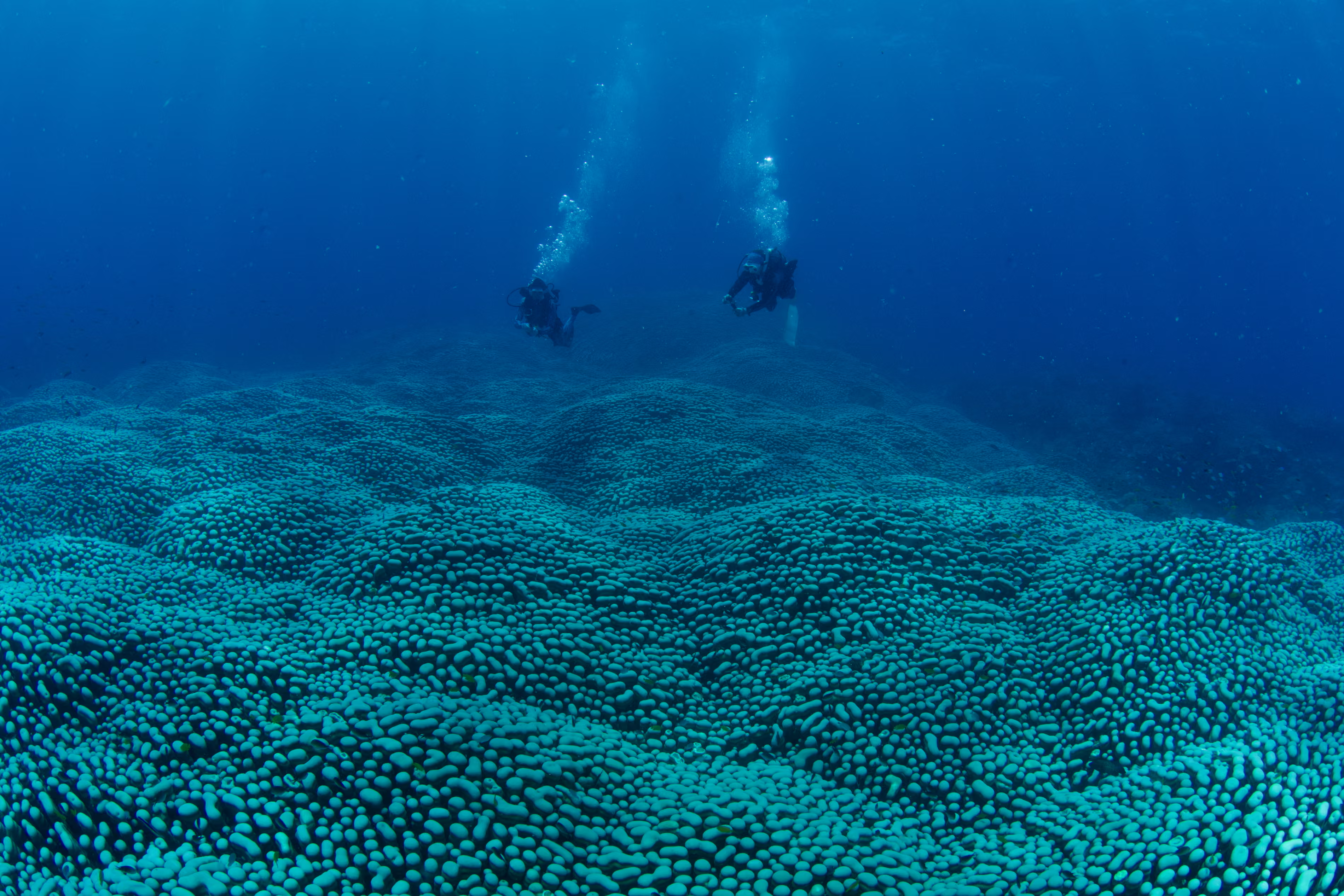
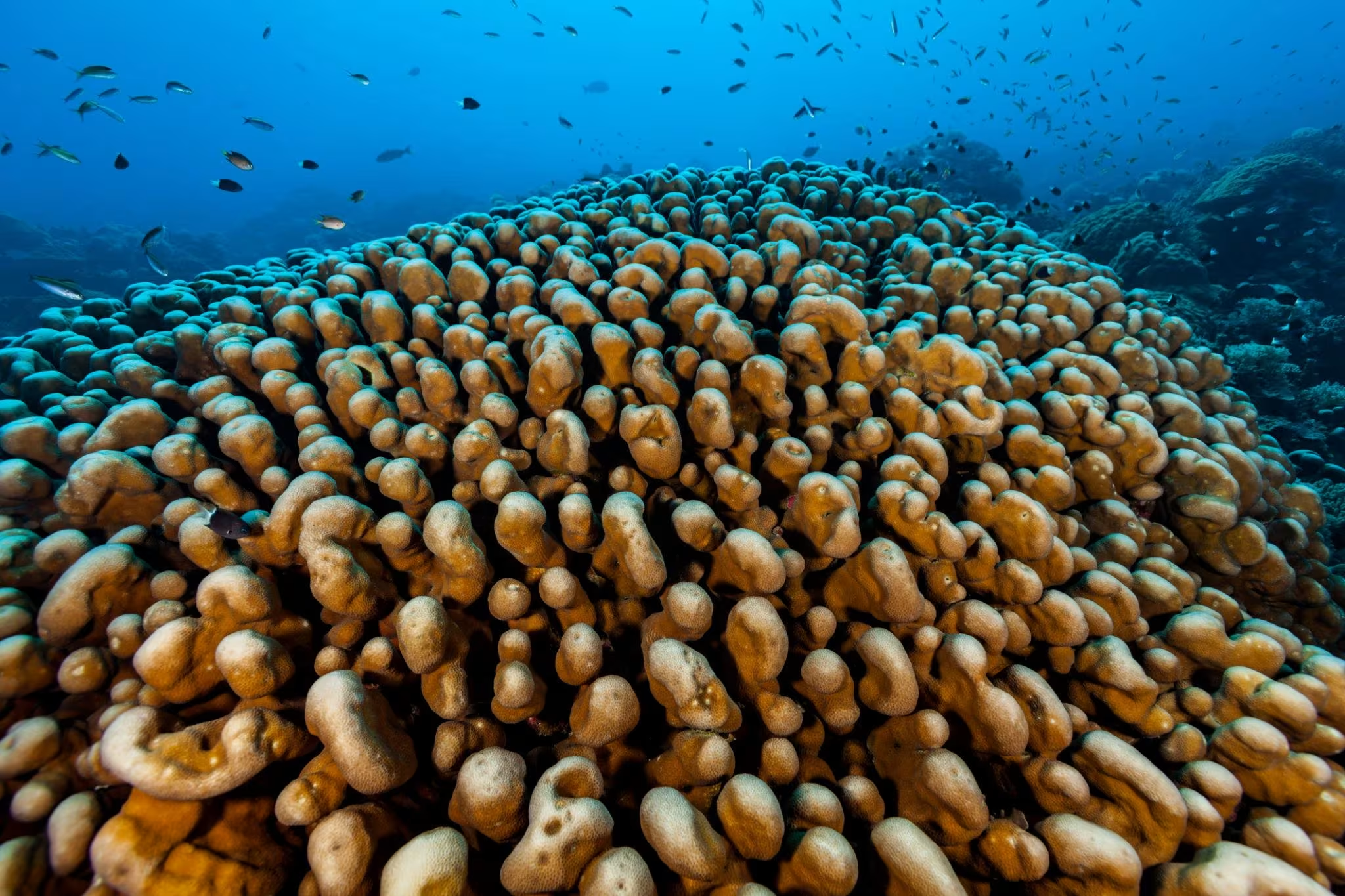
That is exactly what happened on the Great Barrier Reef, where a veteran diver and her daughter, both participating in a citizen science survey, documented what may be one of the largest coral colonies ever recorded. Stretching over 100 metres and covering nearly 4,000 square metres, the Pavona clavus formation has been described as looking like a "rolling meadow" beneath the surface.
It is a poetic image, but it is also a scientific breakthrough.
A discovery hiding in plain sight
Jan Pope had been diving the reef for decades when she noticed something unusual in the water near Cairns. At first it was just a strange pattern below the surface. Once she entered the water, the scale became clear. This was not a typical coral outcrop. It was something vast, textured, and surreal.
She later returned with her daughter Sophie Kalkowski-Pope, who works with Citizens of the Reef, to properly document the site as part of the Great Reef Census. The project relies on crowd-sourced imagery and diver observations to monitor reef health across one of the largest ecosystems on Earth.
What stands out most is not just the size of the coral, but the context of its discovery. This was not a planned hunt for a record-breaking colony. It was the result of careful observation during routine citizen science work. That distinction matters.
Why giant corals matter more than ever
Photo by Citizens of the Reef
Researchers from James Cook University have emphasised that extremely large coral colonies are becoming increasingly rare. Bleaching events are happening more often and with greater severity. For a coral to reach this size, it must have survived decades, possibly centuries, of environmental stress.
That resilience makes the colony scientifically valuable. It may hold clues about heat tolerance, survival patterns, and reef adaptation in warming oceans. Scientists still need extensive genetic sampling to confirm whether it is a single colony or several that have grown together, but either possibility tells an important story about reef survival.
The discovery also highlights how much of the ocean remains under-observed, even in heavily studied locations like the Great Barrier Reef.
Photo by Citizens of the Reef
The quiet power of citizen science
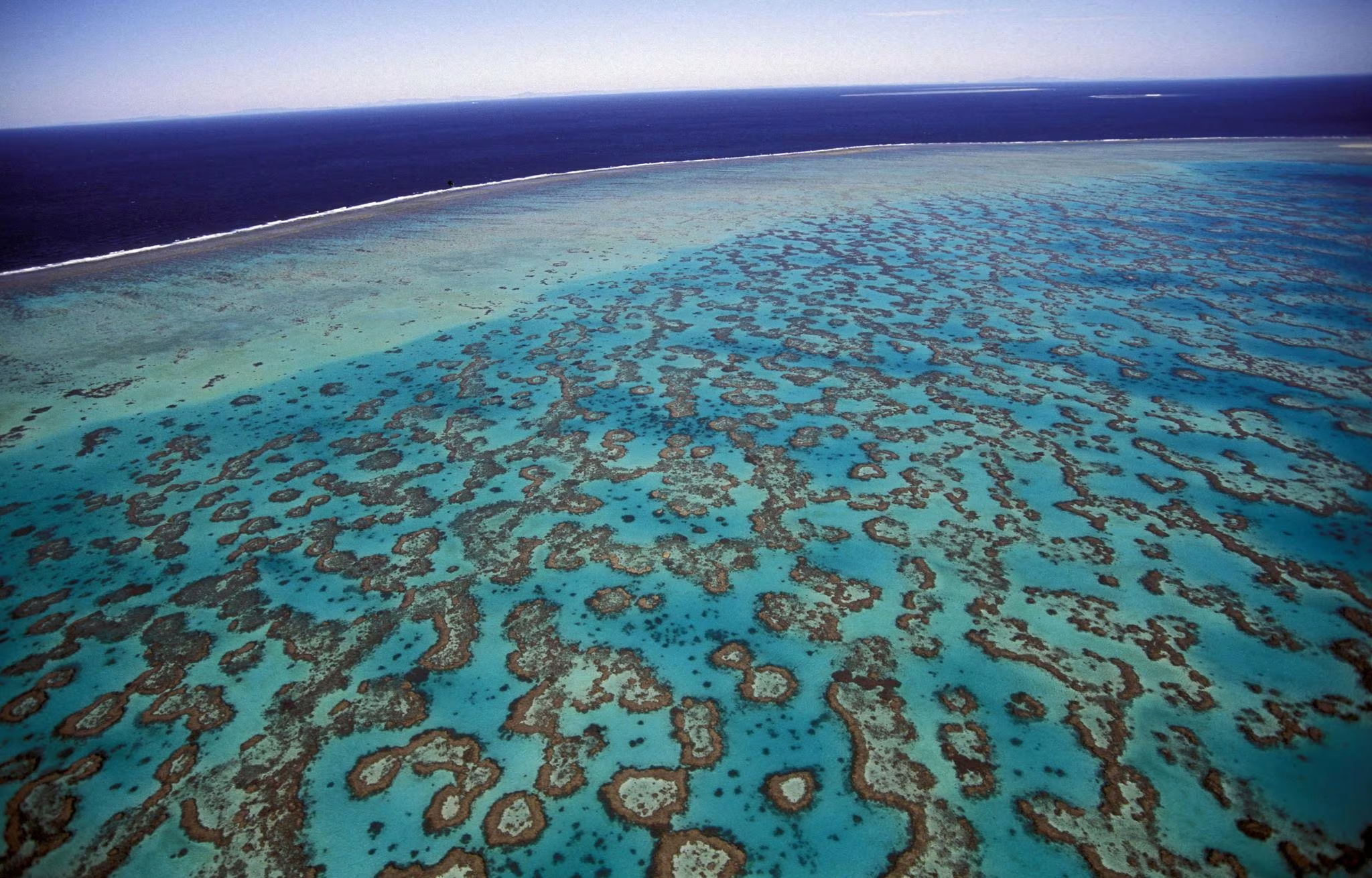
Citizen science is sometimes framed as supplementary to "real" research, but stories like this challenge that narrative. The Great Reef Census has already helped survey a significant portion of the reef system using images collected by everyday divers, tour operators, and ocean enthusiasts.
This approach changes the scale of conservation. Instead of relying solely on limited research teams, thousands of eyes in the water become part of a distributed monitoring network. Patterns of bleaching, coral recovery, and reef damage can be documented far more frequently and across wider areas.
There is also something deeply human about it. A mother and daughter documenting a coral that had likely been growing for generations reminds us that conservation is not just institutional. It is personal.
The Great Reef Census uses images collected by everyday divers, tour
operators, and ocean enthusiasts to survey a significant portion of the reef
system. Thousands of eyes in the water become part of a distributed monitoring
network.
Where divers fit into the conservation story
Most divers do not think of themselves as data collectors. They log their dives, take photos, and share experiences. Yet every image, depth log, and reef observation has potential scientific value when it is structured and shared in the right way.
Platforms like Scuba Network exist in this space between exploration and conservation. They make it easier for divers to record what they see, connect with conservation initiatives, and contribute observations that can support research and reef monitoring over time. Instead of isolated dive memories, experiences become part of a larger ecological record.
When divers upload reef imagery, note unusual formations, or document coral health trends, they are doing more than storytelling. They are helping build longitudinal datasets that scientists and conservation organisations can actually use.
A more connected future for reef protection
The discovery of this giant Pavona clavus colony is not just a feel-good story. It is a reminder that the ocean is still full of undocumented ecosystems and that divers are uniquely positioned to help observe them.
Reefs are changing faster than traditional research timelines can always track. Citizen-led documentation, supported by digital platforms, allows for more continuous and decentralised monitoring. It also encourages a stronger sense of stewardship among the dive community.
There is a subtle shift happening in diving culture. More divers are asking not only where to dive, but how their dives can contribute to something meaningful. Conservation is no longer separate from exploration. It is becoming part of the experience itself.
Reefs are changing faster than traditional research timelines can track.
Citizen-led documentation, supported by digital platforms, allows for more
continuous and decentralised monitoring.
Seeing differently underwater
What makes this story resonate is its simplicity. A diver noticed something unusual. She took the time to look closer. She documented it. She shared it within a citizen science framework. That chain of small actions led to a globally significant discovery.
Somewhere on the world's reefs, there are likely more "rolling meadows" waiting to be noticed. Not necessarily by scientists on scheduled expeditions, but by observant divers who understand that every dive is also an opportunity to witness, record, and protect.
In that sense, citizen science is not an abstract concept. It is a mindset. One that turns curiosity into contribution, and ordinary dives into moments that can shape how we understand and protect the ocean.