Citizen Science Explained: What It Is, Why It Matters, and How to Get Involved
April is citizen science month, so it's the perfect time to look at what citizen science actually is, why the ocean needs it more than ever, and how every diver is uniquely placed to help.
April is citizen science month, so I figured it's a good opportunity to shed some light on a topic many of us have heard of, but might not be super familiar with. Three years ago, I barely knew what it meant myself. Now I'm building a business around it.
What is Citizen Science?
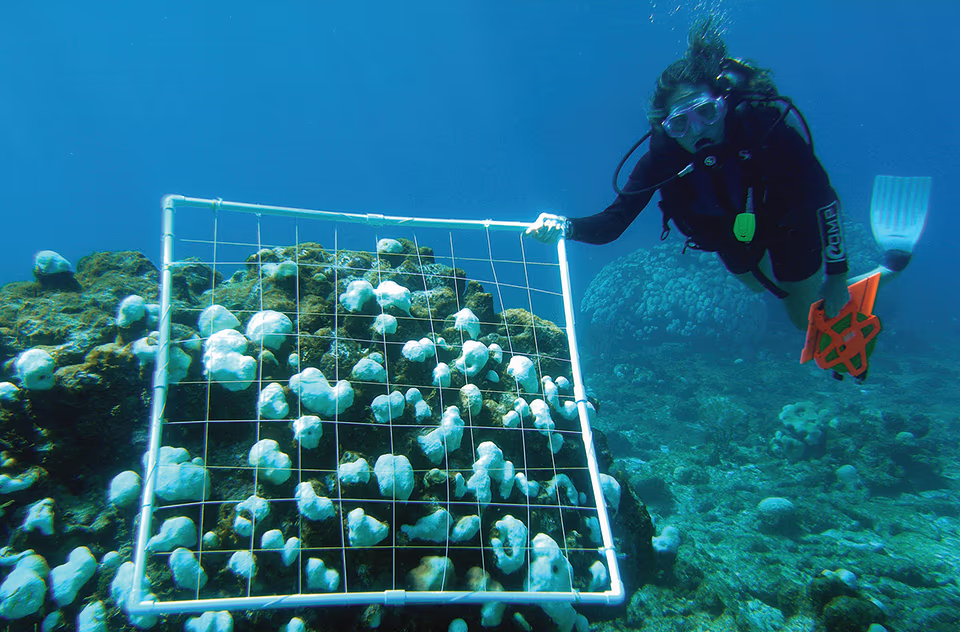
NPS / Ivie Metzen, CC BY 2.0 (via Wikimedia Commons)
Citizen science isn't new, but it's getting a lot of attention recently, and for good reason. Simply put, it's when members of the public take part in scientific research, data collection, or analysis.
This can vary massively, from observing birds on a walk and sharing your findings on a platform like eBird, to bathymetric data collected using a vessel's sonar system and shared with projects like Seabed 2030. There are endless examples, and many enable you and I to turn our everyday activities into something that can be used for science, conservation, restoration, and policy.
I highly recommend checking out a platform like
Zooniverse to see how you could turn your bike
ride to work or walk around the park into something much greater.
Why Do We Need Citizen Science?
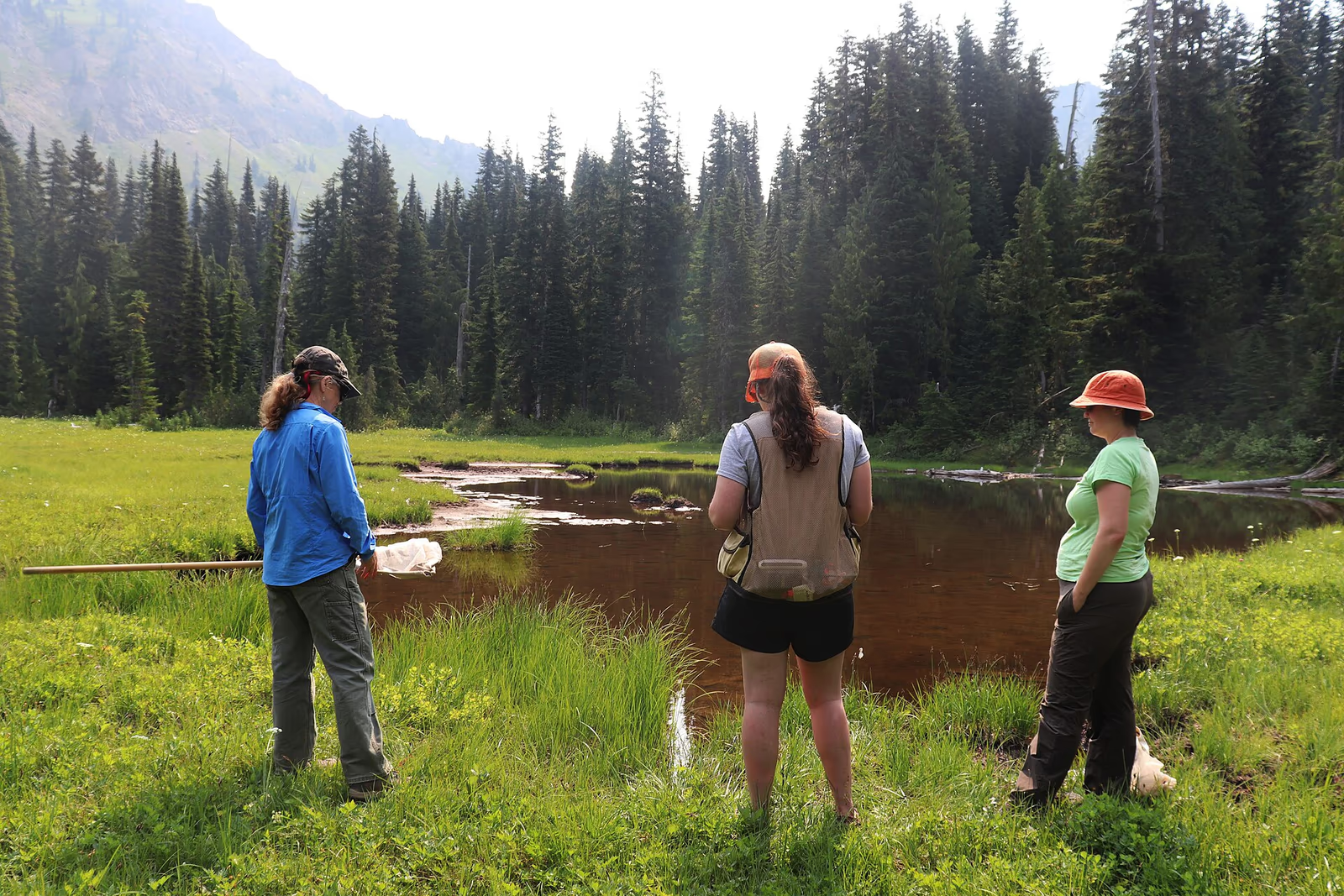
Muntaka Chasant, CC BY-SA 4.0 (via Wikimedia Commons)
The world is under an incredible amount of pressure from pollution, global warming, overfishing, and more. The effort required to slow things down and reverse them is huge.
There are hundreds of thousands, probably millions of experts around the world doing everything they can to fix the mess that us humans are causing, however it's not enough, and the clock is ticking. We're already seeing the consequences first hand.
This is where the general public can step in and support. You don't need to be an expert to collect data, and data is fundamental to fixing anything. Without it, we're guessing. Now, with some fairly basic skills and everyday tech, anyone can contribute.
When Does This Need to Happen?
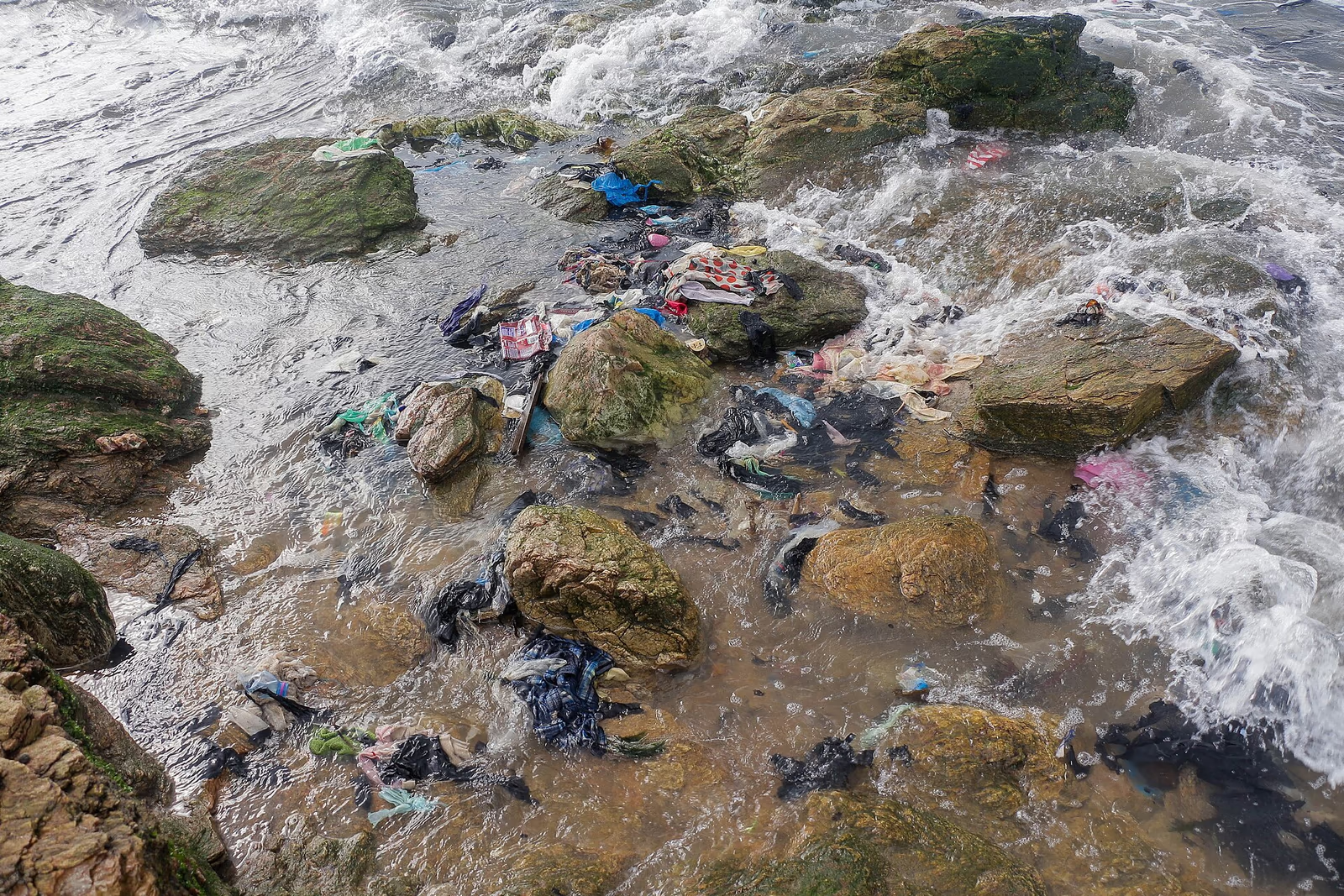
Unsplash, public domain (via Wikimedia Commons)
Nowhere is the need for citizen science more obvious than in the ocean. It covers 70% of the planet, yet we know more about the surface of Mars than we do about its floor.
Exploring and monitoring it at scale is extremely expensive, and with governments slashing science and monitoring budgets, the gap between what we know and what we need to know is only getting harder to close. Meanwhile, overfishing, offshore drilling, and the accelerating push toward deep-sea mining mean marine ecosystems are under more pressure than ever.
We need more data, not less, and there simply isn't enough funding to collect
it through traditional means. That's exactly why there has never been a more
important time to tap into the millions of people around the world who are
ready, willing, and able to help.
How Can I Contribute to Citizen Science?
The easiest way to start is with what you already do. Many of the best citizen science contributions come from everyday activities, because you're already out there noticing things and collecting pieces of the puzzle.
Divers are in a particularly good position to help. The ocean produces over half of the world's oxygen, yet marine biodiversity is declining at unprecedented rates. Given its scale, the data gaps are enormous, and the need for eyes underwater has never been greater.
The tools are already in your kit. Most scuba divers have a dive computer that records depth and temperature, and many now carry an underwater camera like a GoPro. Pair a photo of a piece of coral or a fish with the data from your dive computer and you've made a valuable scientific observation.
Multiply that by millions of divers doing this for fun around the world, and
you've got a monumentally powerful dataset.
The trouble is, that data usually ends up stuck on SD cards, buried in a dive computer app, or uploaded to a logging platform that does nothing with it. None of those places are putting it to use.
That's what we set out to change. Scuba Network lets you import dives from other platforms or apps and attach photos, then enriches each record with the metadata researchers actually need: georeferenced locations, timestamps, depth and temperature profiles. From there, we format it to match the open, interoperable standards used by marine scientists, and push it into research data infrastructures like EMODnet, the European Marine Observation and Data Network, so it becomes usable for marine and policy research rather than just another logbook.
Every dive you've ever done could be making a difference.
Who Can Participate in Citizen Science?
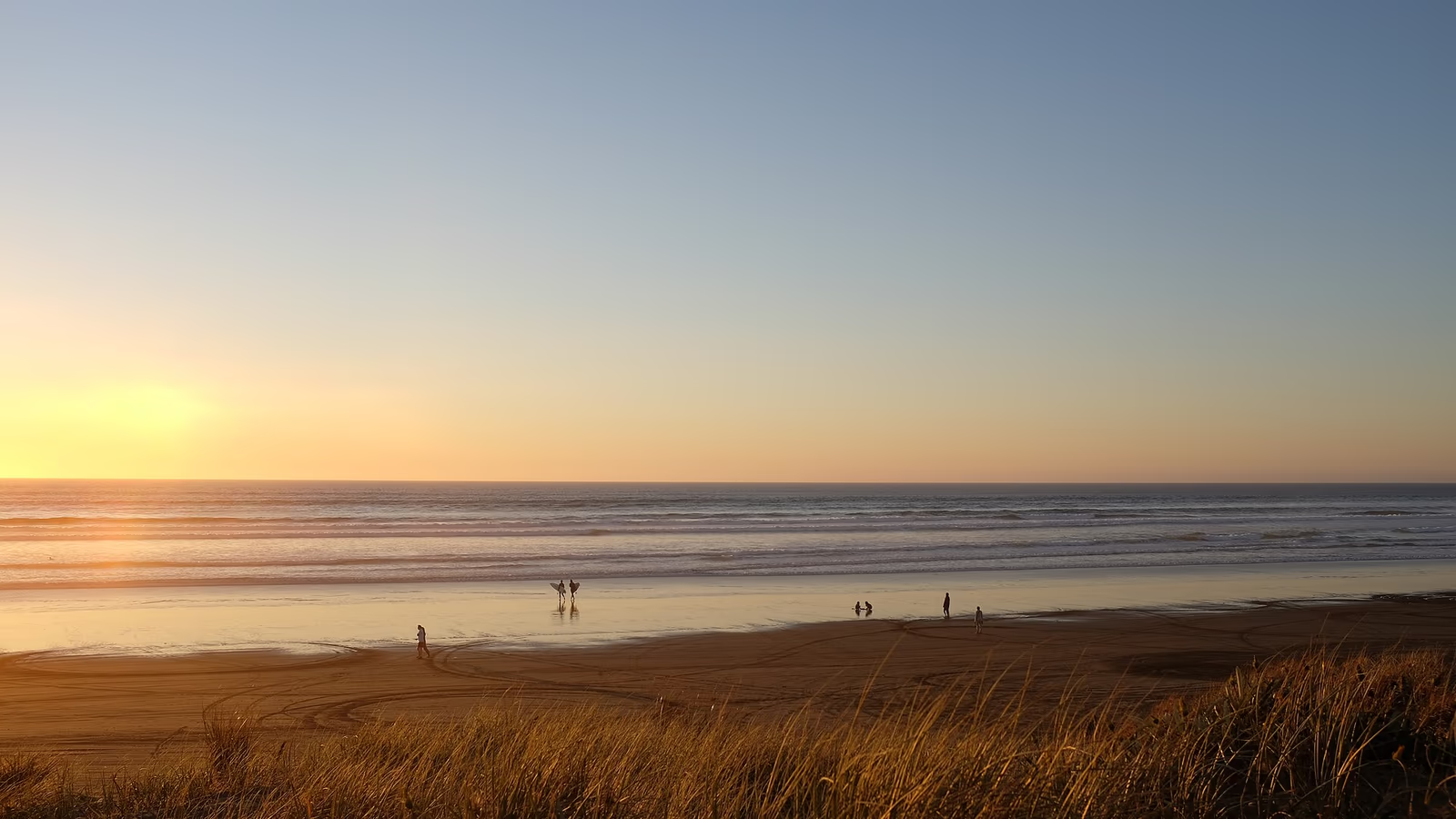
Alka, CC BY-SA 4.0 (via Wikimedia Commons)
Anyone and everyone! This is going to take a massive team effort. We can't leave this up to the experts alone, and we certainly can't leave it up to the governments.
Take seagrass as an example. Many people have snorkelled or dived over a seagrass meadow without giving it much thought, yet seagrass captures carbon up to 35 times faster than tropical rainforest and is a critical nursery habitat for species like seahorses, turtles, and commercial fish.
Through Project Seagrass and its SeagrassSpotter app, snorkelers and divers have contributed over 8,000 sightings worldwide, logged straight from their phones. That data has supported scientific studies on the global threats facing seagrass and helped validate the satellite mapping models researchers use to locate meadows.
That's the power of citizen science, and that's what's at stake. We have an
opportunity right now to do something about it. The question is: are you going
to take it?